Cannabis is known for its distinctive aroma, flavor, and effects, but much of the plant’s chemical richness is concentrated in tiny structures called trichomes. These crystal-like glands cover the surface of mature cannabis flowers and contain cannabinoids, terpenes, and other compounds. When these trichomes are separated from the plant material and collected, the result is a concentrated cannabis product commonly known as kief.
Understanding how cannabis trichomes are separated can help explain why kief has a different appearance, texture, and potency compared with traditional cannabis flower.
What Are Cannabis Trichomes?
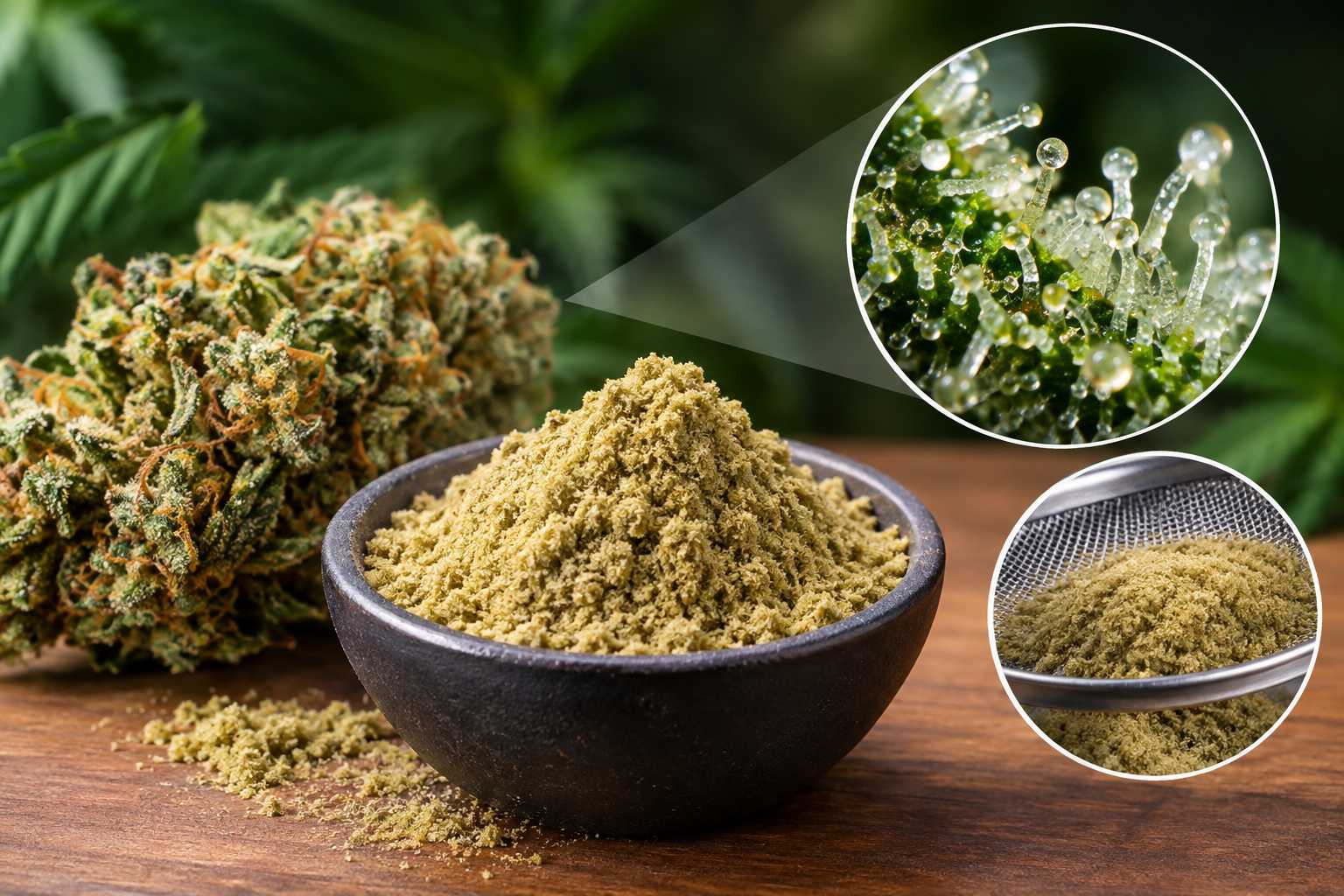
Trichomes are microscopic resin-producing structures found primarily on cannabis flowers. Under magnification, they look like tiny mushrooms or glass-like crystals covering the plant.
The most commonly discussed type is the capitate-stalked trichome, which has a bulbous resin head supported by a small stalk. These trichomes contain many of the compounds responsible for cannabis characteristics, including THC, CBD, and aromatic terpenes.
Because the resin glands are concentrated on the outside of the flowers, they can be separated from the surrounding plant material using mechanical methods.
Why Are Trichomes Separated?
Cannabis flower contains a mixture of plant components, including cannabinoids, terpenes, plant fibers, and other organic material. Separating the trichomes creates a more concentrated material.
Kief is essentially a collection of loose cannabis trichomes and small amounts of associated plant material. Its appearance can range from pale gold to greenish or sandy brown depending on the cannabis variety, separation method, and amount of plant material present.
The separation process also influences the final texture and cleanliness of the kief.
Dry Sifting: A Common Method of Producing Kief
One of the traditional ways to separate cannabis trichomes is dry sifting. In this process, dried cannabis material is gently moved across a fine screen or mesh.
The screen is designed to allow the smaller trichome heads to pass through while retaining larger pieces of plant material. The resulting powder-like material collected underneath is commonly called kief.
The quality of dry-sifted kief depends on factors such as the quality and dryness of the starting material, mesh size, handling, and separation technique. Gentle processing can help limit the amount of unwanted plant matter that becomes mixed with the trichomes.
Ice-Water Separation
Another method uses cold water and ice to help separate trichomes from cannabis plant material. This approach is often associated with making bubble hash, rather than traditional dry kief.
Cold temperatures can make resin glands more brittle, allowing them to detach from the plant material more readily during agitation. The mixture is then filtered through different mesh screens to separate the trichome-rich material.
Although ice-water separation and dry sifting both focus on collecting trichomes, the final products can have different textures, moisture levels, and processing characteristics.
What Happens After Separation?
Once trichomes have been separated, the collected material may be screened or refined further to remove larger pieces of plant matter. With dry kief, the resulting material is generally loose and powdery.
Some kief may also be gently pressed to create a more compact product. When pressure and sometimes mild warmth are applied, the resin within the trichomes can cause the material to bind together.
The final product can therefore vary considerably depending on how extensively it has been processed.
Factors That Affect Kief Quality
Several factors can influence the quality and characteristics of kief. The genetics of the cannabis plant are important because different varieties produce different amounts and types of trichomes.
Harvest timing also matters. Trichome development changes as cannabis flowers mature, which can affect the cannabinoid and terpene profile.
Processing conditions are equally important. Excessive agitation can introduce additional plant material, while poor storage conditions can affect aroma, texture, and freshness. Properly handled kief generally retains much of the characteristic aroma associated with the cannabis from which it was produced.
Buying Kief Online in Canada
For consumers who are legally eligible to purchase cannabis in Canada, buying kief online in Canada can be an option when looking for a convenient way to explore cannabis concentrates. When shopping, consumers should check that the retailer is authorized to sell cannabis in their province or territory and review the product information carefully. Details such as cannabinoid content, product type, package information, and storage recommendations can help consumers understand what they are purchasing. Laws and purchasing rules can vary across Canada, so buyers should follow the regulations applicable to their location.
Final Thoughts
Kief demonstrates how much of cannabis’s resin is concentrated in its tiny trichomes. Through methods such as dry sifting and cold-water separation, these resin-rich structures can be separated from the surrounding plant material and collected into a concentrated cannabis product.
From the development of trichomes on the living plant to their careful separation and storage, every stage can influence the characteristics of the finished kief. Understanding this process gives cannabis consumers a clearer picture of what kief is, how it differs from flower, and why its appearance, texture, and aroma can vary between products.
About the Author